
A television network is an organization that produces, acquires, and distributes television programs to multiple TV stations or platforms at the same time. These networks act as centralized content providers, ensuring that shows, news, and events reach audiences across regions or countries.
Television networks play a crucial role in shaping entertainment, news, and cultural programming worldwide.
Table of Contents
What Is a Television Network?
A television network is a content distribution system that broadcasts programs to affiliated television stations or directly to viewers through cable, satellite, or digital platforms.
Instead of each local station creating all content independently, networks provide:
- TV shows
- News programs
- Sports events
- Special broadcasts
This allows for consistent programming across wide geographic areas.
How Does a Television Network Work?
The basic workflow of a television network includes:
- Content creation or acquisition (shows, news, sports)
- Scheduling programs for broadcast
- Distribution via satellite, cable, or digital transmission
- Broadcasting through affiliate stations or platforms
- Advertising and monetization
This centralized system helps networks reach millions of viewers simultaneously.
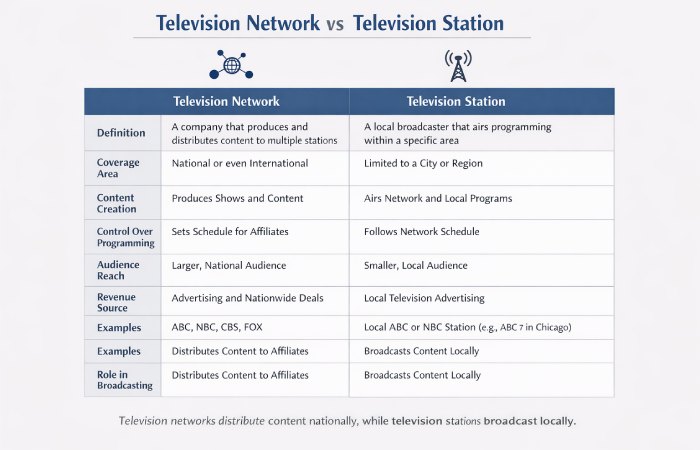
Television Network vs Television Station
Types of Television Networks
1. Broadcast Television Networks
These networks transmit content over the air and are accessible with an antenna.
Examples: National broadcasters offering free-to-air programming.
2. Cable Television Networks
Cable networks deliver content through paid cable subscriptions.
Examples: Entertainment, sports, and news channels.
3. Satellite Television Networks
These networks use satellite signals to reach viewers, especially in remote areas.
4. Digital and Streaming-Based Networks
Modern networks distribute content through internet-based platforms, often overlapping with OTT services.
Major Functions of a Television Network
- Program production and licensing
- Scheduling and broadcasting
- Advertising sales
- Audience measurement
- Brand building
Television networks act as the backbone of the TV industry.
Television Networks and Advertising
Advertising is a primary revenue source for television networks. Advertisers pay networks to:
- Reach large audiences
- Target specific demographics
- Promote products during popular shows
Prime-time programming typically attracts the highest ad rates.
Television Networks in the Digital Era
With the rise of streaming platforms and OTT services, traditional television networks have evolved by:
- Launching digital platforms
- Offering on-demand viewing
- Using hybrid broadcast–streaming models
This shift allows networks to remain competitive in a changing media landscape.
Advantages of Television Networks
- Wide audience reach
- Professional content production
- Consistent programming schedules
- Reliable news and entertainment sources
Disadvantages of Television Networks
- Limited viewer control
- Fixed broadcast schedules
- Regional content restrictions
- Competition from streaming services
Television Network vs Streaming Platforms
| Feature | Television Network | Streaming Platform |
|---|---|---|
| Content Access | Scheduled programming | On-demand |
| Viewer Control | Limited | High |
| Internet Required | Not always | Yes |
| Advertising | Heavy ad presence | Ads or subscription-based |
Frequently Asked Questions (FAQs)
What is a television network in simple terms?
A television network is a company that provides TV programs to multiple stations or viewers at the same time.
Is a television network the same as a TV channel?
No. A network supplies content, while a channel or station broadcasts that content locally.
How do television networks make money?
They earn revenue mainly through advertising, sponsorships, and licensing deals.
Are television networks still relevant today?
Yes. Although streaming is growing, television networks still reach large live audiences, especially for news and sports.
Can a television network operate online?
Yes. Many networks now distribute content through websites, apps, and OTT platforms.
Final Thoughts
Television networks remain a foundational part of the global media industry. While technology has changed how people watch content, networks continue to adapt by blending traditional broadcasting with digital innovation.
Understanding television networks helps viewers better navigate today’s evolving entertainment ecosystem.
